
Languages of India

The Indian constitution recognises 22 official languages. Most of the Indian states we have today were created in 1956, based on the languages most people in a region spoke. In reality, there are hundreds of other languages spoken around the country. As per the census, most Indians speak at least two or three languages — often a mother tongue spoken at home and the official languages used in their state or school.
Almost all Indian languages are centuries, if not thousands of years old. Therefore, each of our languages has its own history and is spoken beyond modern geographical borders. Bengali is spoken in Bangladesh. Tamil is spoken in parts of Sri Lanka, Singapore, and Malaysia. Punjabi is spoken not only in the Indian state of Punjab but also in parts of Pakistan.
If you travel just a few hundred kilometres in any direction from your home, you are bound to encounter a new dialect or language. For example, Chennai is the capital of Tamil Nadu. The official language of the state of Tamil Nadu is Tamil. However, just 150 km North of Chennai lies Gudur, Andhra Pradesh. Therefore, there are many Telugu speakers in Chennai and Tamil speakers in Gudur.
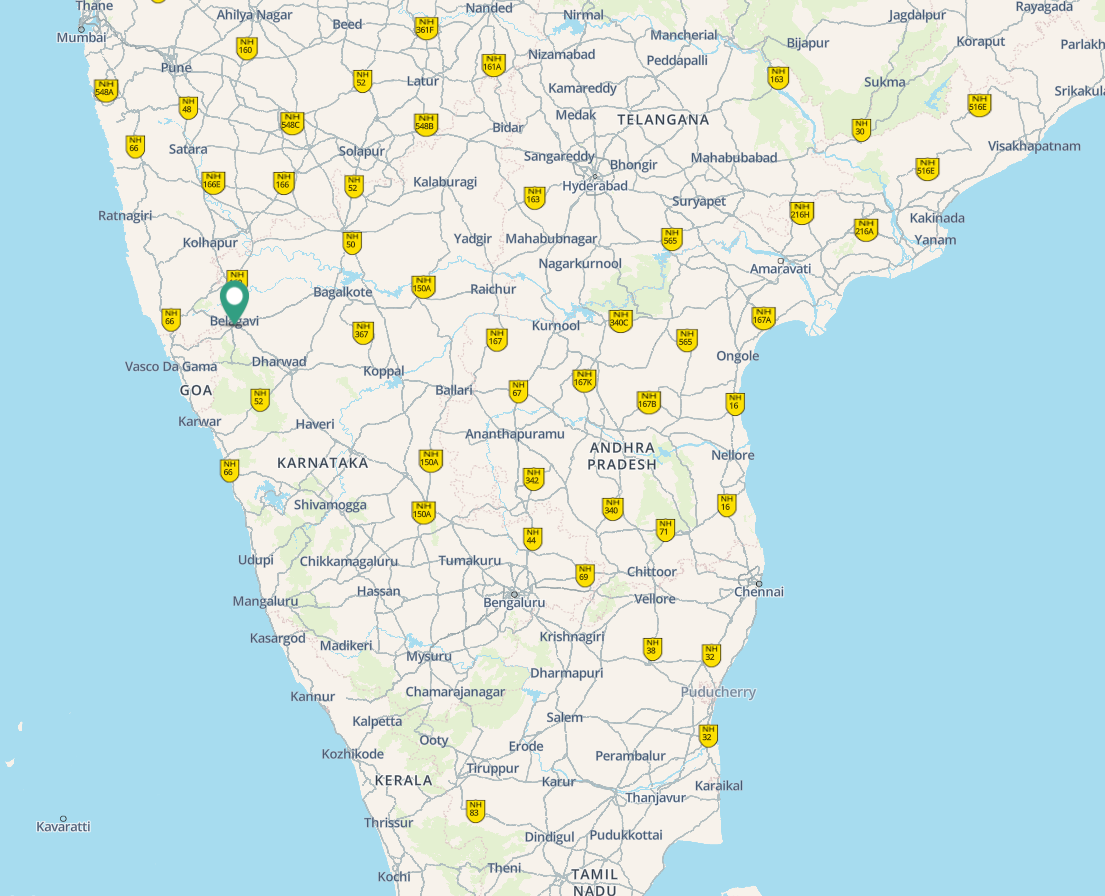
Belgavi in Karnataka is a most interesting city. The Belgaum district alone recorded 80 languages in the census! These include Kannada, Marathi, Urdu, Hindi, Telugu, and Konkani. If you travel North of Belgavi, you reach Maharashtra where the official language is Marathi. Traveling South takes you deeper into Karnataka where you may hear not only Kannada but also Tulu and Kodava. Traveling East from Belgaum will take you towards Telangana where Telugu is widely spoken. And finally, west of Belgaum is Goa where the primary language is Konkani!
Many Indian indigenous languages are facing extinction today. But the efforts of researchers, scholars, and governments are bringing them back. For example, the Indian Statistical Institute in Kolkata is helping to develop a dictionary for the Kheria Sabar, a community in West Bengal. Such efforts help to revive the words and stories of a culture.
Ultimately, languages are kept alive by people who actually use them. And so, let's take a look at how many Indian scripts you can recognise! You can right click or long press to download the image and print it if you like.
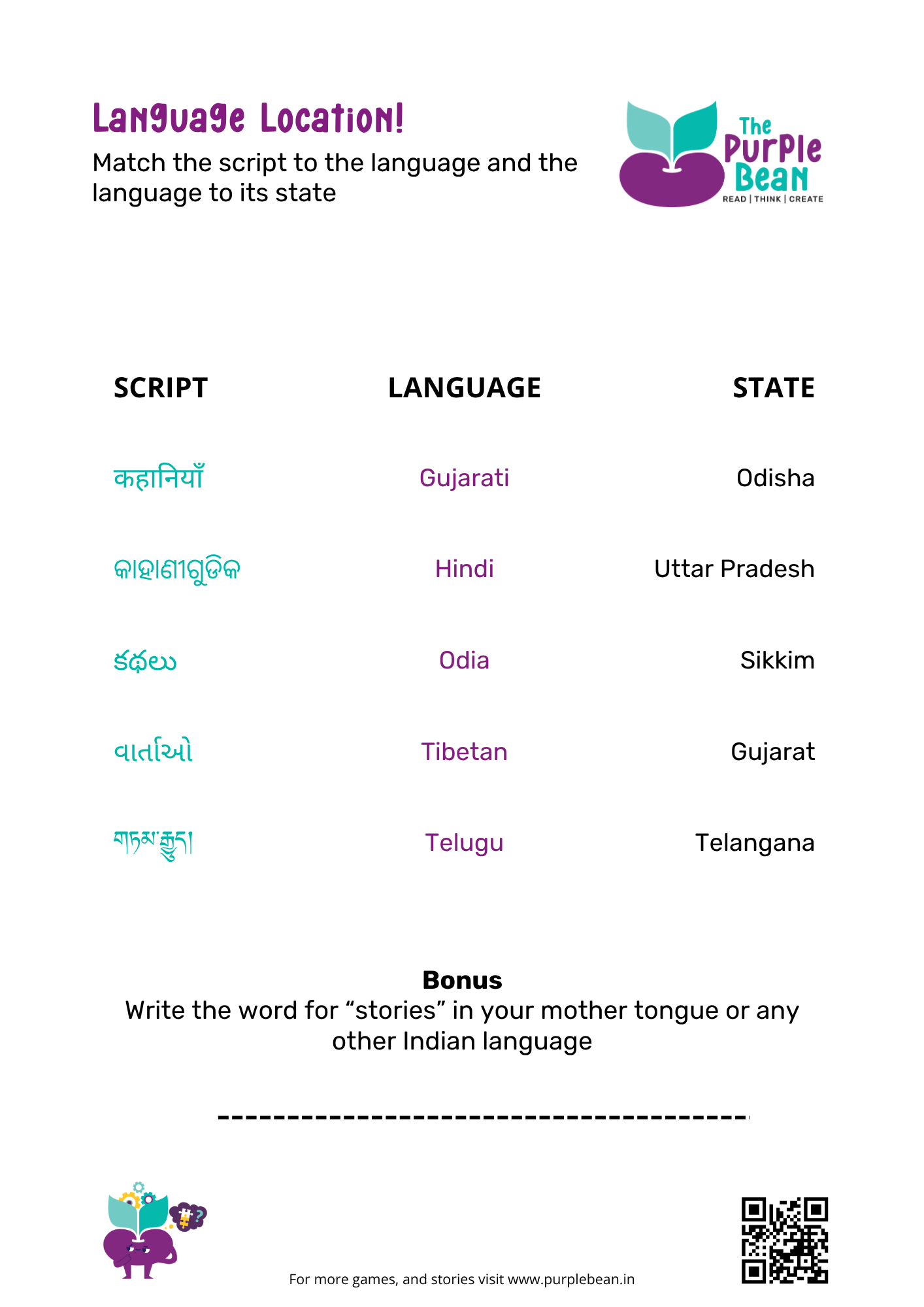
For the solution, click here. No peeking!

How did you enjoy this page? Share your thoughts in an email to taatha@purplebean.in or use our contact page.
Try one of our stories or a creative activity next!