
Games of India
Many of the games played globally today originated in India. These games were often more than just pastimes; they were tools for teaching strategy, ethics, and physics.
Chaturanga
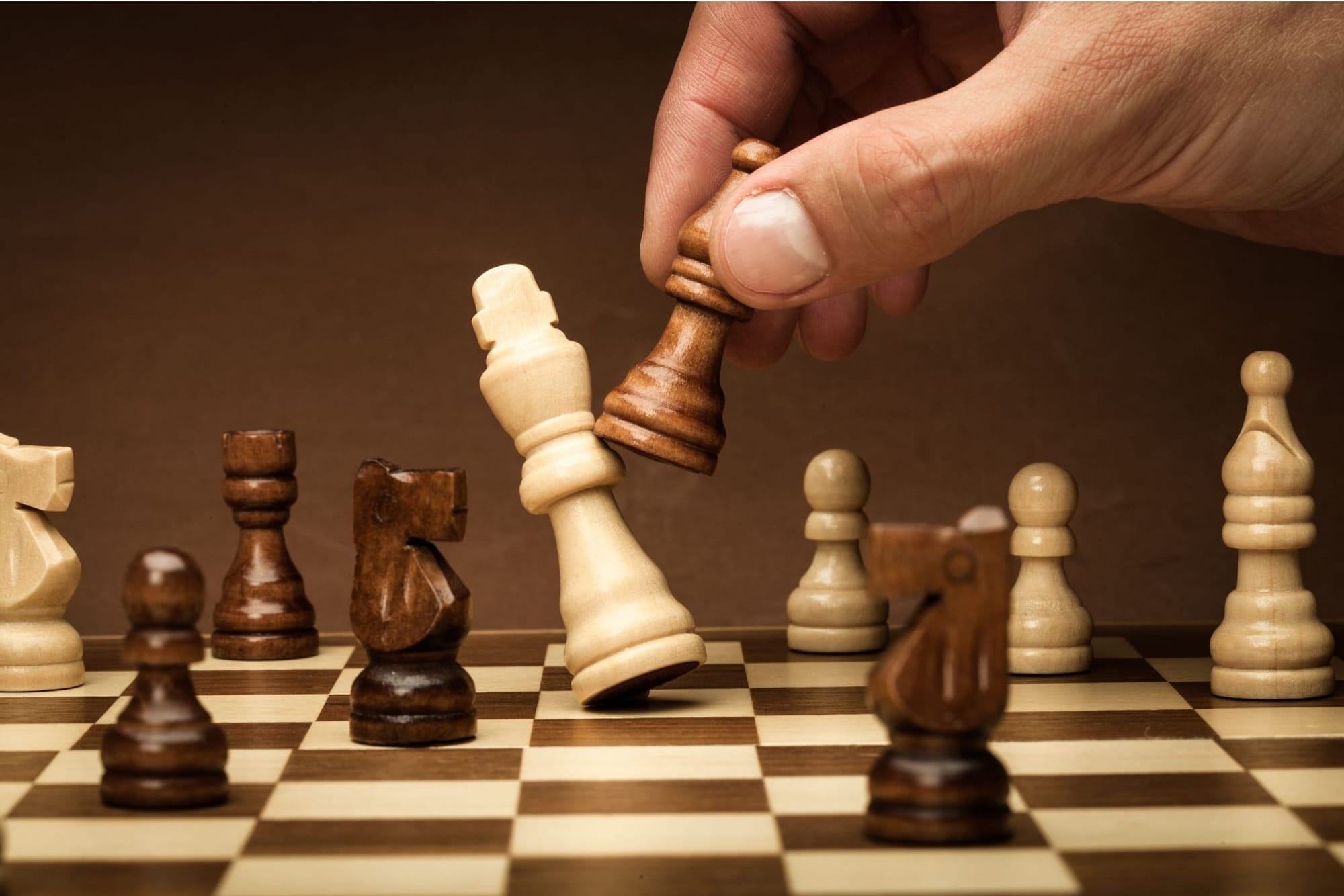
Chaturanga refers to the four divisions of an ancient Indian army: infantry, cavalry, elephants, and chariots. The game was designed to simulate battlefield strategy. Archaeologists at Lothal, a city of the Indus Valley Civilisation in Gujarat, discovered small terracotta pieces that resemble gaming tokens. These finds suggest that a form of board-game strategy existed in India nearly 4,000 years ago.
As the game traveled out of India, the 'minister' became the Queen and the 'chariot' became the Rook. However, the movements of the pieces and the rules are still similar to the game played by ancient Indians.
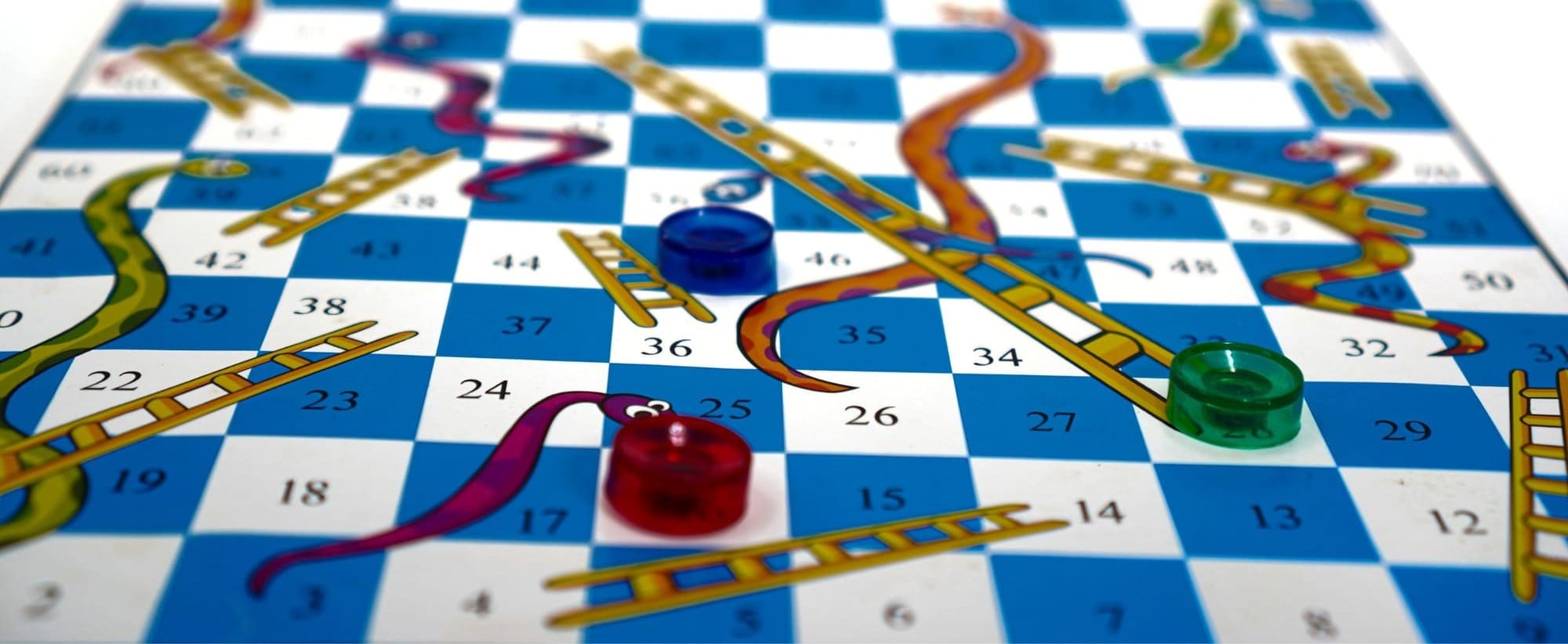
Moksha Patam (Snakes and Ladders)
In Moksha Patam, the ladders represented punya (good deeds) that accelerated a person's progress, while the snakes represented paapa (bad choices) that caused them to slide backward. The goal was to reach the top square, representing Moksha or liberation. Ancient Jain manuscripts and scrolls from Rajasthan and Gujarat contain hand-painted Moksha Patam boards. On these scrolls, each square is labeled with a specific Sanskrit word for a virtue or a vice, showing that the game was meant to be a visual map of human behaviour and its consequences.
Over time, the snakes and ladders started representing the good and bad things that happen to us. Today, it's played as a game of luck.
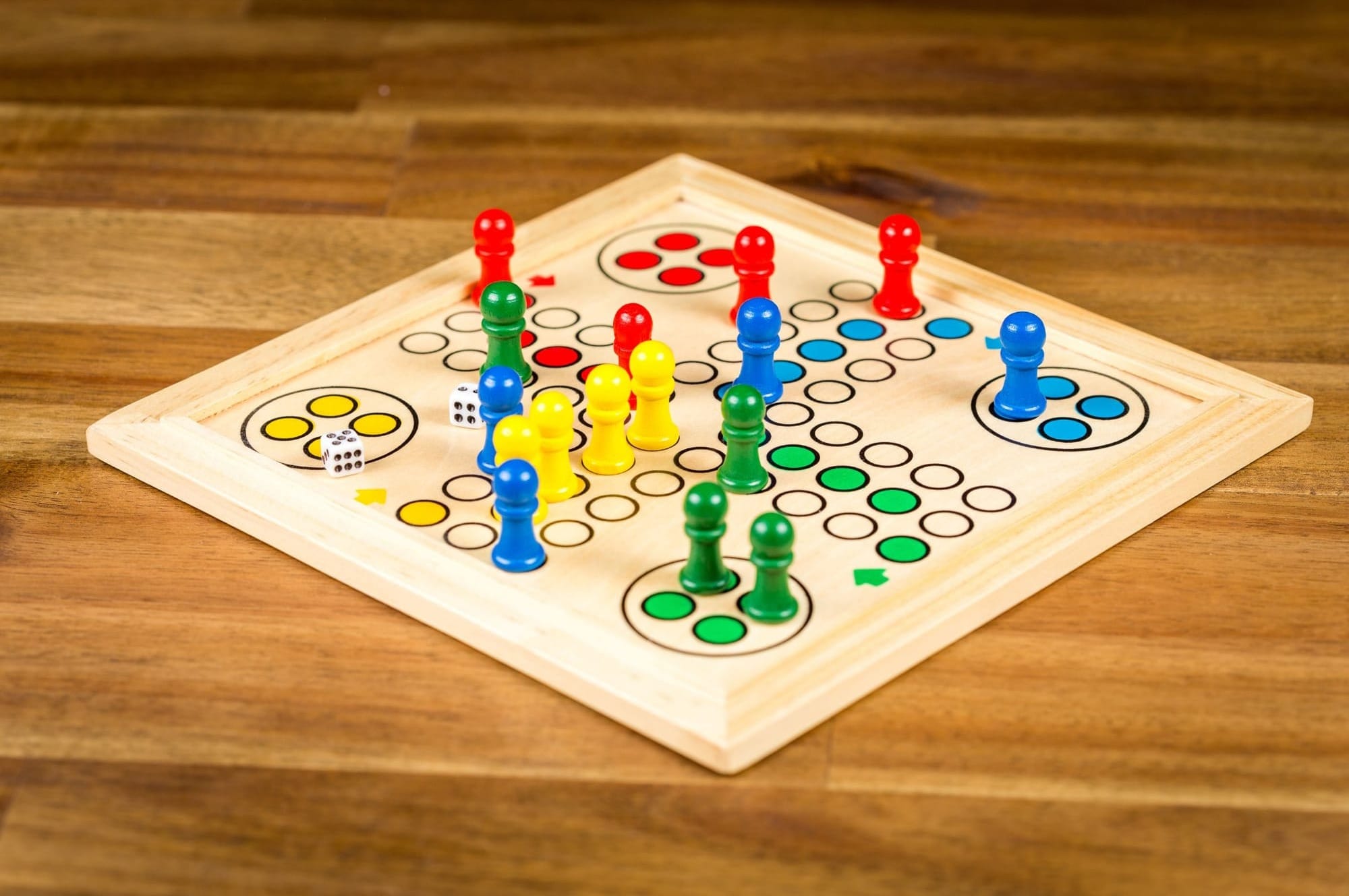
Pachisi (Ludo)
Pachisi is the ancestor of Ludo. The name comes from the Hindi word pachis, meaning twenty-five—the highest score players could achieve using cowrie shells as dice. The board is shaped like a cross, and the objective is to navigate all pieces to the center, known as the charkoni. History is literally carved into the stone at Ellora Caves in Maharashtra (Caves 21 and 29), where archaeologists found Pachisi boards etched into the floors dating back to the 6th century.
The game traveled to the West in the 19th century, where it was simplified, but the geometry has remained the same.
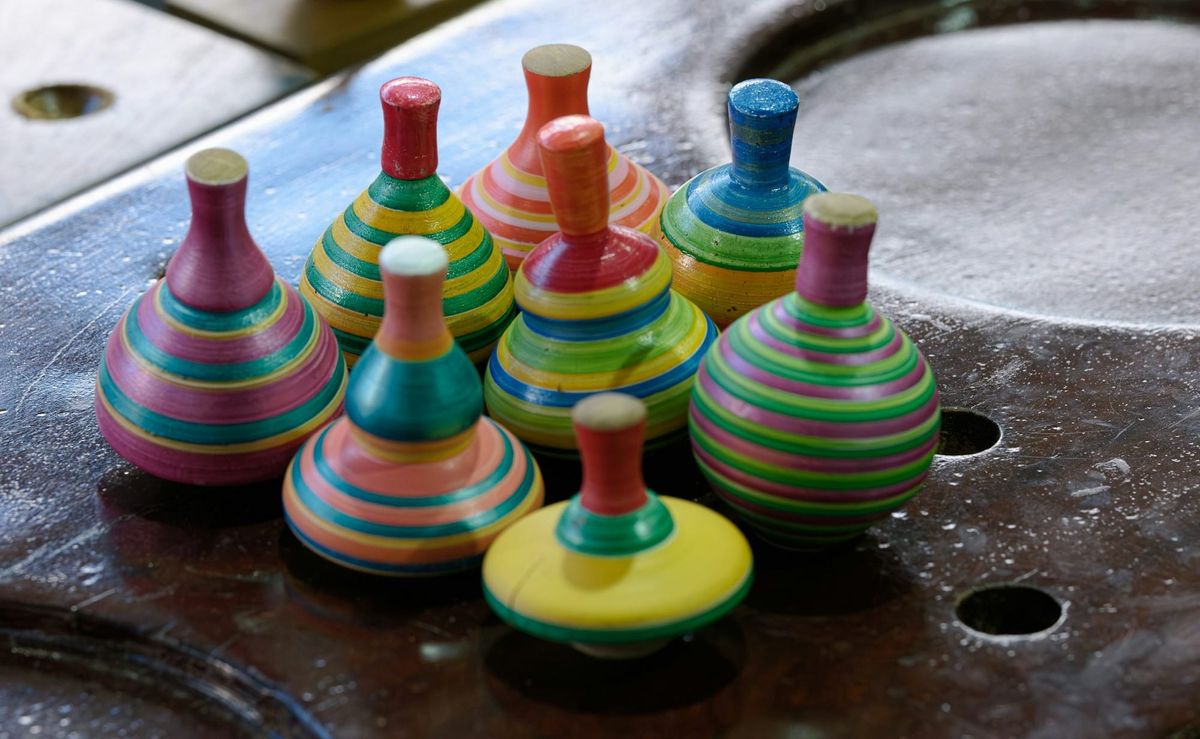
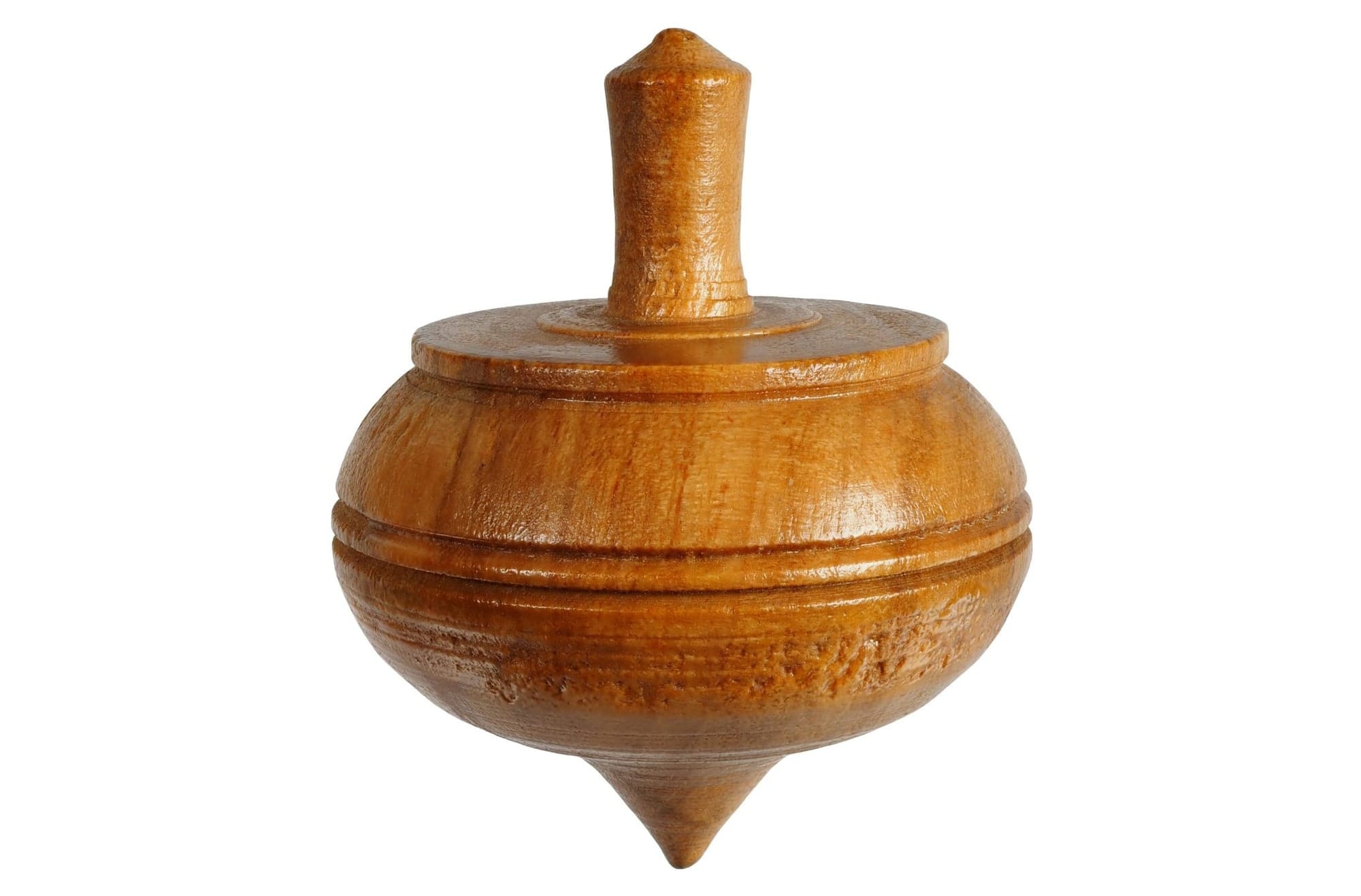
Pambaram (The Lattoo)
The wooden top, or Pambaram, is a study in physics. A string is wound tightly around the bottom half of the grooved wooden body. When thrown correctly, the top to spins on its iron nail tip. Mastery of the game involves not just the "spin," but the "toss"—some players can even scoop a spinning top off the ground using only the string!
It's time to play now 😃
The elders in your family might be familiar with this ancient game. These game boards have been found etched on the floors of old temples. It shows that temples were a place to socialise as well as worship.
The game is called Puli-Meka in Telugu and Puli-Aadu in Tamil. What is it known as in your language? Right click or long-press the image below to download the game board. A PDF is linked below for you to print.
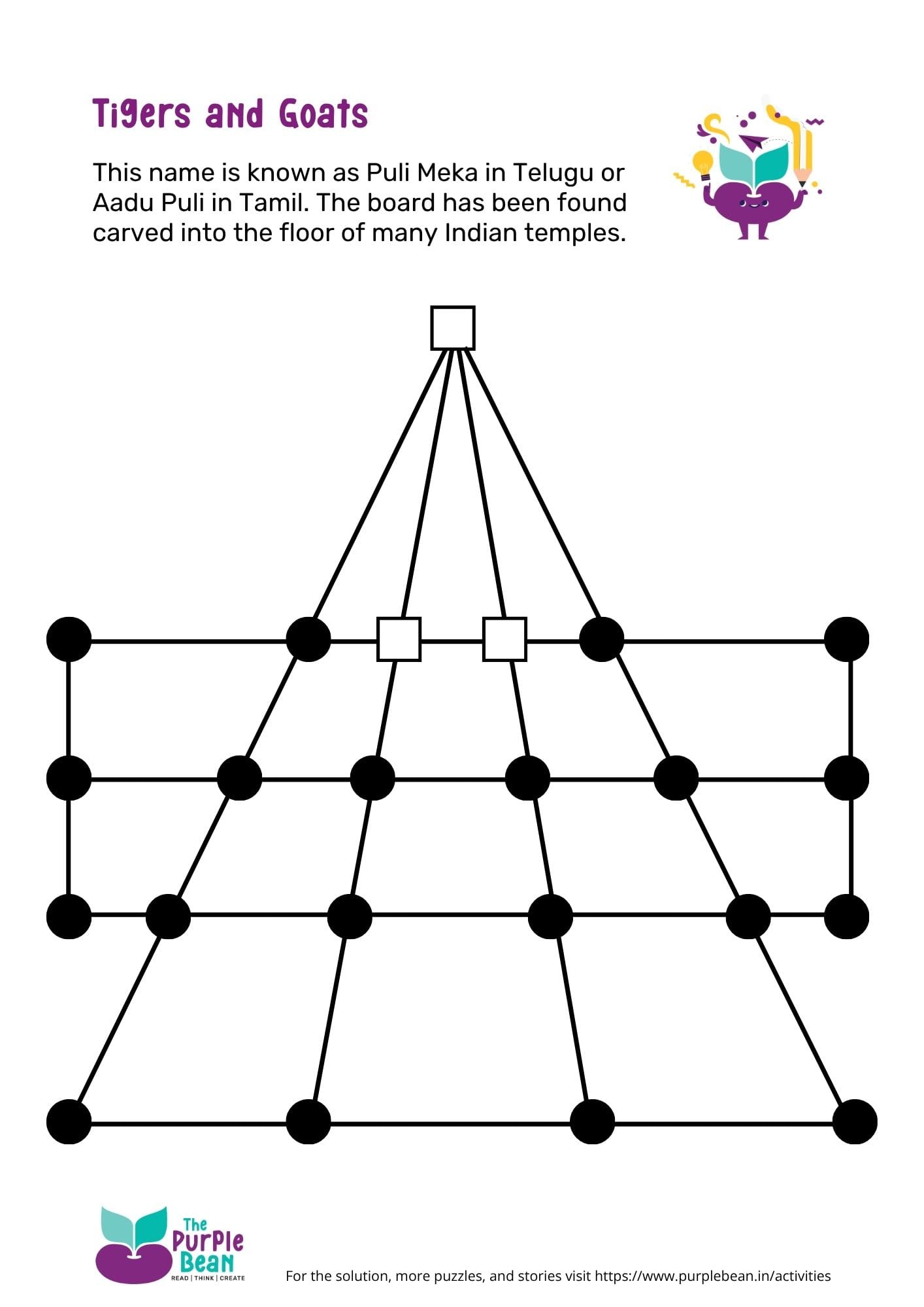
The board and rules can also be downloaded as a PDF.
How did you enjoy this page? Share your thoughts in an email to taatha@purplebean.in or use our contact page.
Try one of our stories or a creative activity next!