
Colours of India

For centuries, people in India made colours from natural sources such as fruits, flowers, and minerals. They also used simple chemical processes to prepare and fix these colours on fabric.
Saffron is valued for both its flavour and its bright yellow colour. When mixed with milk, it slowly releases its colour into sweets and drinks. Turmeric, along with ingredients like alum and lemon juice, is used to make the red kumkum powder used in ceremonies.
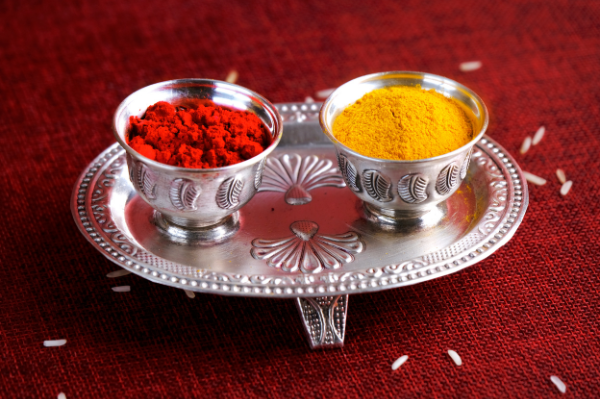
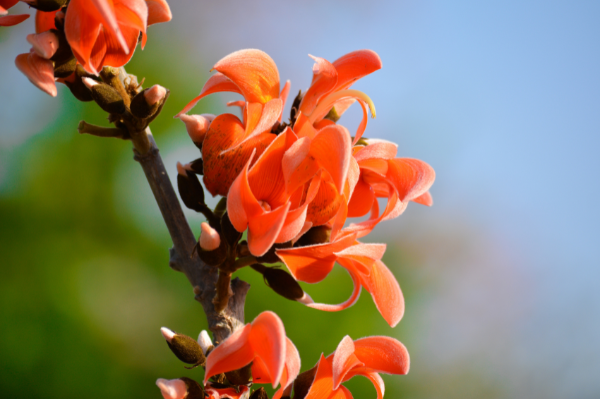
Natural colours were also used to make powders for festivals such as Holi. For example, dried petals of the palash flower were used to make a bright orange colour.
To dye cloth, colours must stay fixed to the fabric. Substances such as alum, iron compounds, and common salt were used for this purpose. Other materials like lime and soda were used to treat and prepare fabrics.
Indigo is a plant-based blue dye. It was an important export from India for over 2,000 years. From about the 1600s onwards, Indian dyed and printed textiles were exported by sea through ports such as Surat and Masulipatnam.
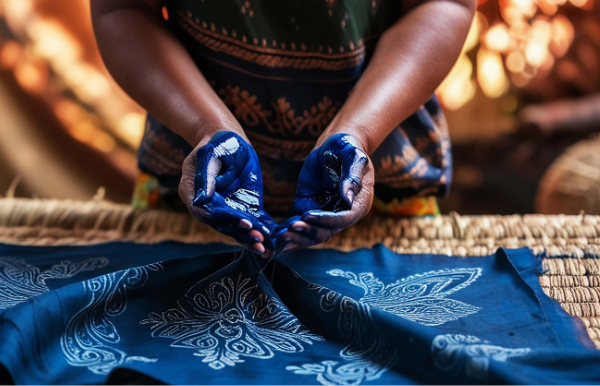
During British rule, cultivation and export of Indigo were tightly controlled. Many farmers were forced to grow indigo and were paid very little for it. In 1917, farmers in Bihar organised a movement known as the Champaran Satyagraha.
And now that you know all about the tradition of natural colours in India, here's a puzzle for you to solve. You can right click or long press to download the image and print it if you like.
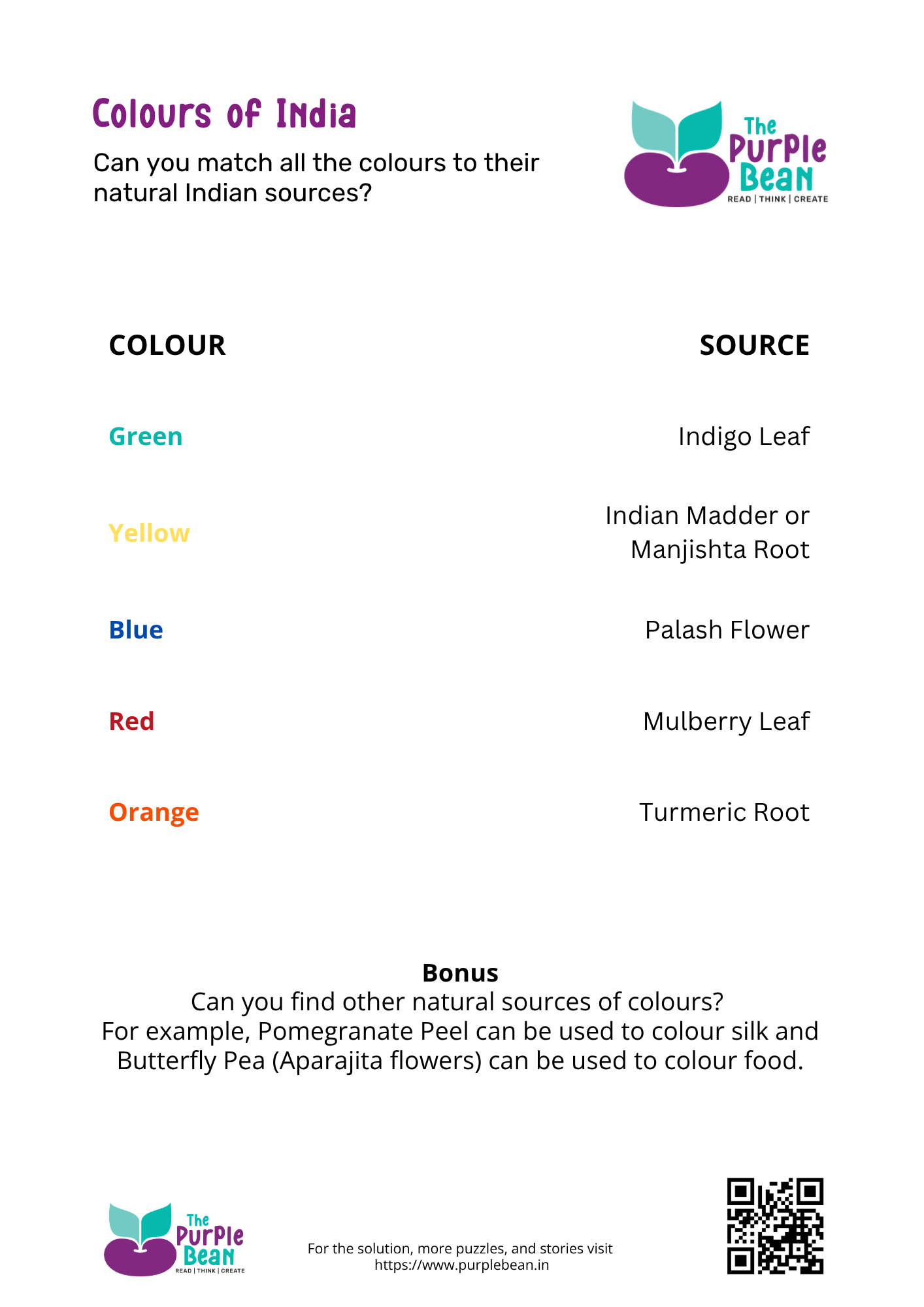
The solutions are here.

How did you enjoy this page? Share your thoughts in an email to taatha@purplebean.in or use our contact page.
Try one of our stories or a creative activity next!