
How to write a story
Do you know how to tell a story? Of course you do! Everyone does. When you come home and tell your parents what happened at school, you're telling them a story. When you tell your grandparents about your week, that's a story too. And when you talk to your friends, you tell them stories about your trips, vacations or other adventures. Writing is just a more permanent way of sharing a story.
The words we speak vanish soon after we finish saying them. But the words we write on paper can stay on for a long, long time. And that's why we write stories differently than we tell them. We need the reader to know some things we don't need to tell the people around us.
Everyone has their own way of writing, and there's no right or wrong way. But here are the three parts of a story.
1. Who are you?
Imagine being very, very tall. And now imagine yourself to be a small child who is just learning to walk. Would you see the same things?
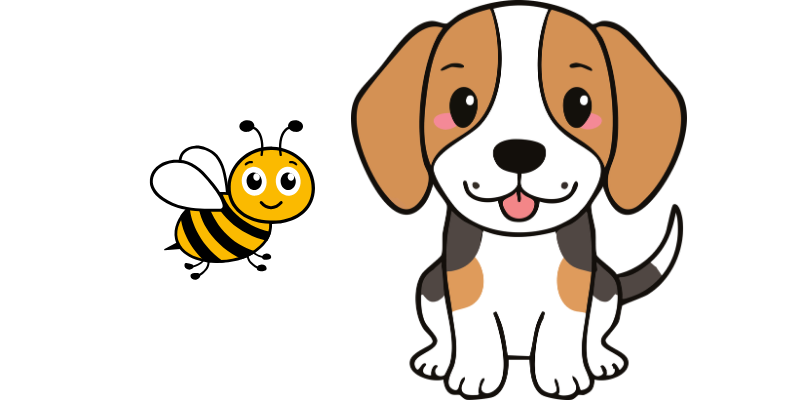
Now imagine being a dog that can view only shades of grey. Or what if you were a bee that can fly and see ultraviolet light? How different would your views of the world be?
Who you are shapes how you tell the story. Before you start writing a story, write down who you are. "I'm a giant who's ten feet tall and loves munching peanuts" or "I am an eight-year-old girl who loves building with blocks".
2. Where are you?
The next thing you need to decide is where the story is happening. Is it at the park? Perhaps it's at school. Or maybe it's a made-up world.
You need to think carefully about the place and time. For example, Venkat hates going to school on Thursdays. And so, his story about a Thursday might be about something he dislikes. While a story about Sundays might be happier because his father makes biryani.
The place, the time, and who is around makes the reader understand the story better. If I just told you that a cow ate some flowers and started laughing, you might not find that funny at all. But if I told you that a cow wandered into our school one morning and ate the hibiscus bush right outside the principal's window, you might laugh too.
3. What interesting thing is happening?
We often confuse what's important with what's interesting. For example, an exam is very important. But it's not really very interesting because all exams are alike. If the teacher mixed up the question papers, however, I think that would be interesting.
Don't worry too much about what other people find interesting. What we find interesting is unique to us. And when we write a story, we can share what's in our mind with the world.
The writer must think like a reader and explain things clearly. The reader must think like the writer to understand things. And that's how stories bring people together!
We'd love to read your stories. Send them to us in an email to taatha@purplebean.in