Experiment 3: Stories and Music
Or, how Carnatic music contains stories in every song
After earning a diploma in Hindustani vocal as a teenager, I started learning Carnatic music a few years ago as a hobby. One day, my Guru gave me a simple instruction, "Start taking classes for children. That's the only way you will practice and improve."
So I did.
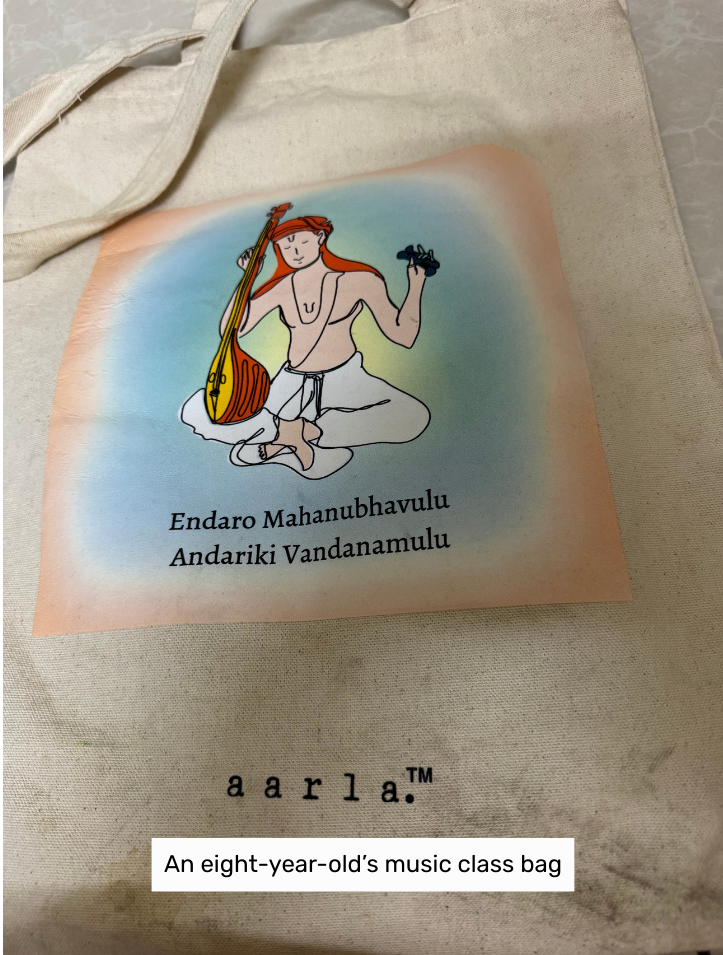
I started classes with four four-year-olds at the daycare centre nearby and soon found myself with over a dozen students aged 4 to 12. As I started teaching simple bhajans, I realised how much cultural pedagogy is embedded in our traditional music. "Mooshika Vaahana Gajaanana" sounds simple enough to an adult. But kids would ask me what the words meant. Fair question!
I decided to start every class with a story. Five minutes of story time ensures punctuality too. Kids might want to miss voice exercises but they don't want to miss a story at any cost.
As they listened to stories, children started making connections like "Is Ganesha older or Muruga?" One of the sweetest realisations was, "Shiva and Parvati got married and had two sons, just like my parents got married and had my sister and me".
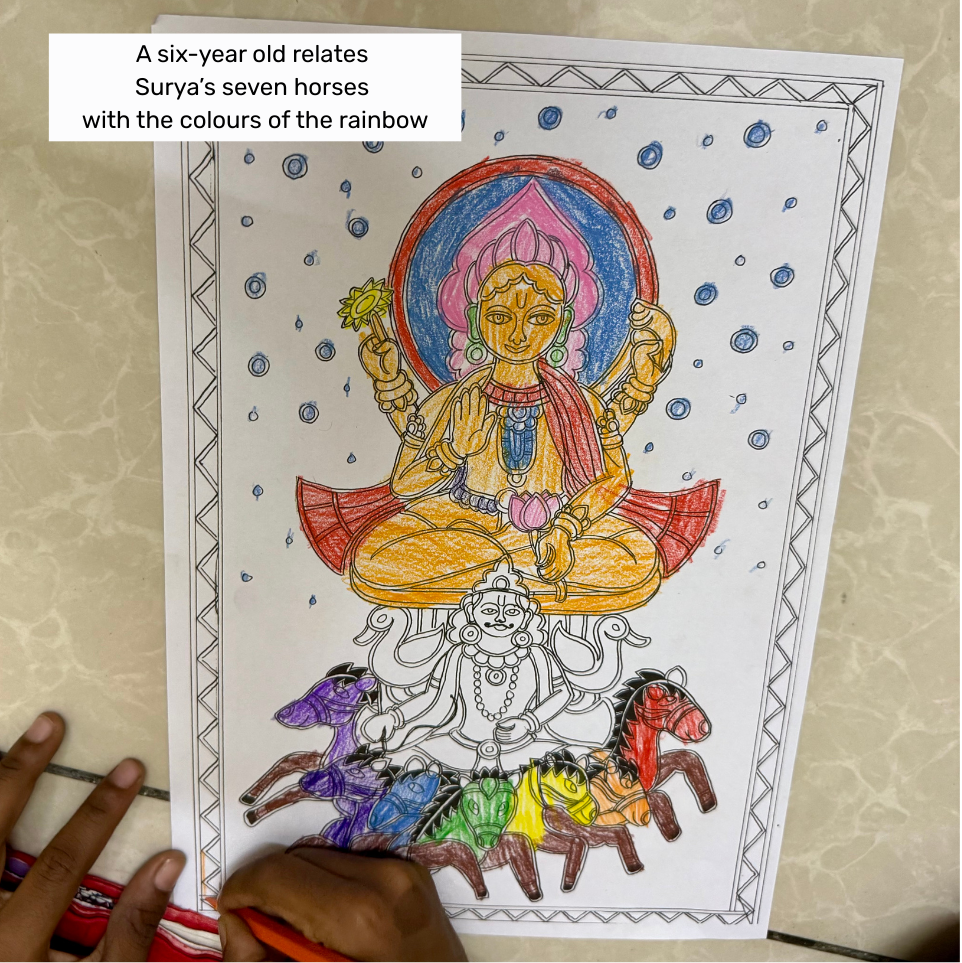
As the connections grew, so did the questions: What does Ganesha's elephant face look like? Does Durga really ride a lion? What does Shiva wear? And so, I started showing them pictures of deities and giving out colouring sheets.
In parallel, I threw in a bit of math too - understanding swara jumps, patterns, and repeated phrases kept brains engaged.
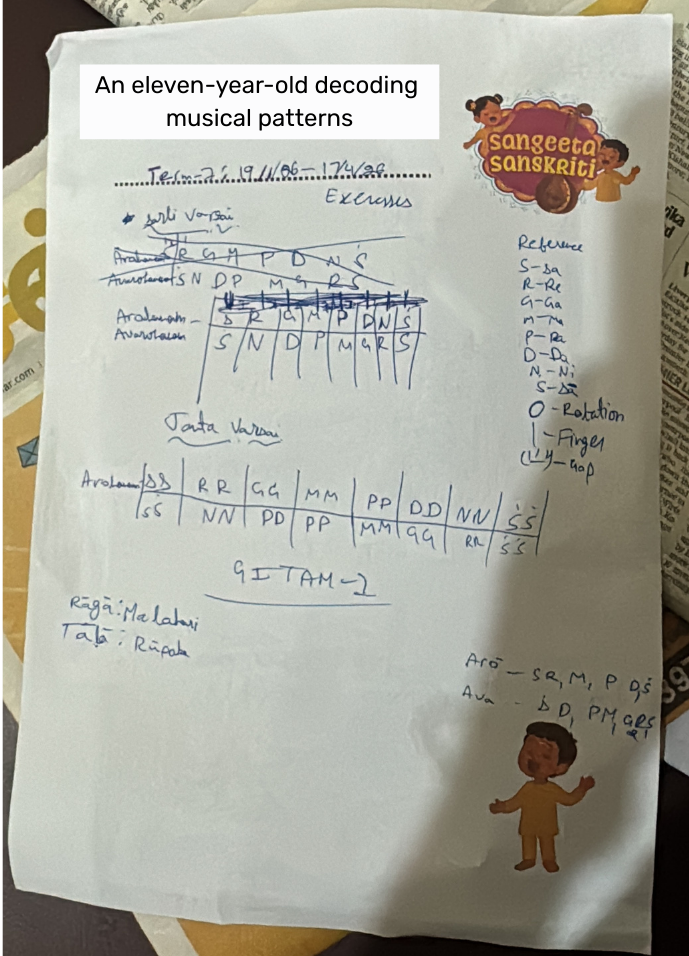
Music incidentally happens between stories, art, and math puzzles. Or so the children like to think. But by the end of the year, they had learned over a dozen bhajans and many more voice exercises. We also mostly sing from memory, not notes.
Taken together, the feedback from children on Venkat and Friends, my summer camps, and my music classes pointed me towards a bigger picture. All the children were telling me the same thing, in their own way. They want engagement, not just stories. More importantly, they want their curiosity to be respected. It soon became clear to me why the traditional Gurukul system taught not one or two but 64 arts!
For some children, words alone are enough. Others need more for their brains to engage. Both preferences are absolutely ok.