Experiment 4: Stories and Art
Or, how should children’s books be illustrated?
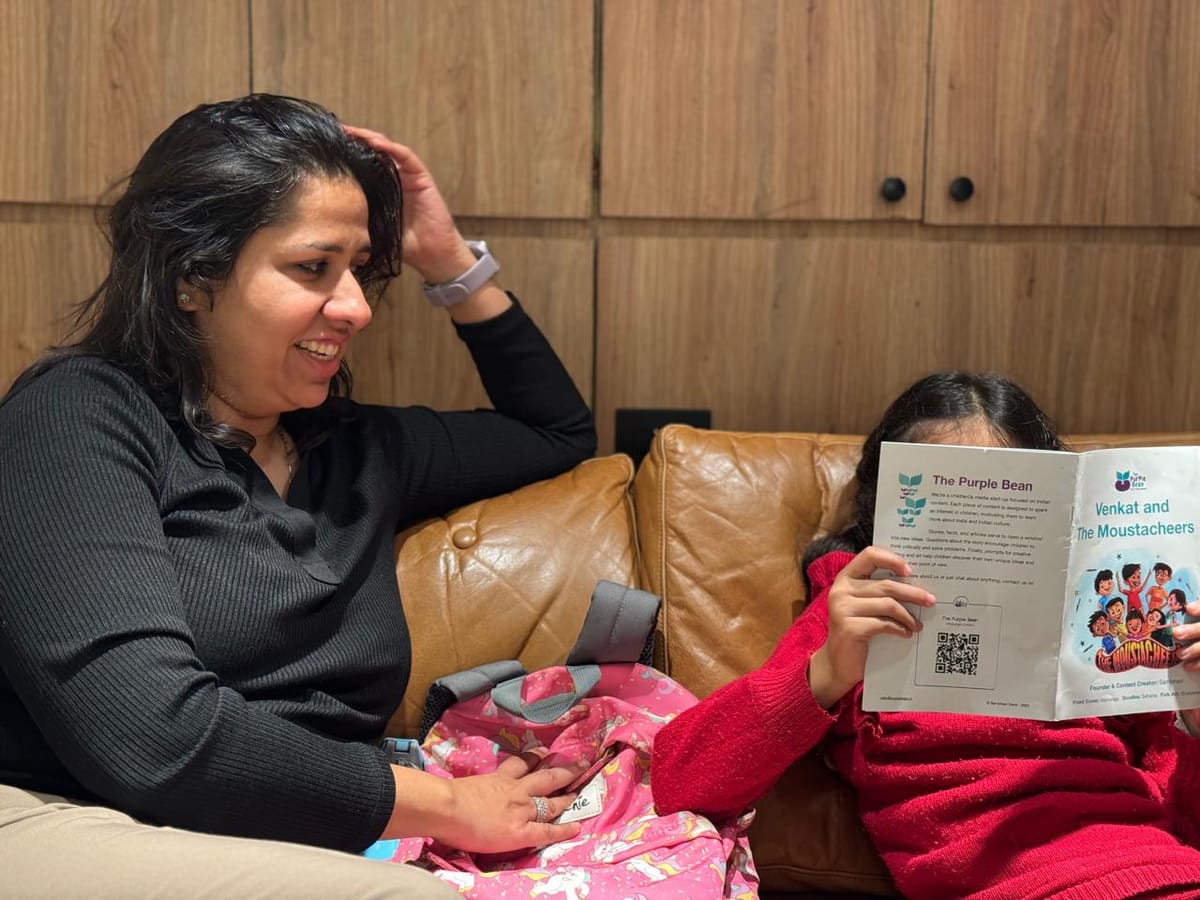
I met Umang Mehta's daughter in Delhi last year. As I am now officially “that aunty”, the one who has stories in her bag at all times, I gave Amu a couple of my Venkat stories and asked her what she thought.
Amu read the story with great interest. Then she asked me, “Aunty, your story is very nice. But I think your books need more colour.”
The next day, she showed me her very colourful art and all her story books - all richly illustrated.
Of course, economics is a major factor driving my decision to keep the single-story books in black and white. I print so many of them for camps and giveaways that my local print shop has my number saved as “Sambhavi Booklet Madam”. But I digress.
Amu’s request deserved a deeper answer than that. The black and white interiors and spartan line drawings aren’t just an economic constraint. They’re a conscious design choice.
So I asked Amu, “I understand that more drawings would make the book look nicer. But tell me, wouldn’t that make your own imagination stop drawing?”
“What do you mean?” Amu asked.
I said, “Well, when you hear a story, doesn’t your mind automatically draw a picture for you?”
She nodded, and so I added, “I like keeping these pictures small because I think you can already imagine Venkat’s world easily. It’s very similar to your own. And if you want more colour in your books, you can always colour the images yourself. A lot of kids do that.”
In an ideal world, Amu would have leapt at the idea. But in the real world, I could see the gears were turning, and that was enough for the moment.
Aditya Gangadhar Dasika and I discussed this extensively when we worked on “Venkat and Friends”. His filmmaker’s instinct helped him identify and illustrate the most high-impact scene in each story. We deliberately kept the rest of the book sparse. The little illustrations break up large walls of text, and they provide an insight into specific objects or words.
Of course, elaborate illustrations do add value. The right illustrations convey cultural nuance, iconographic detail, and set the tone for a story. But the wrong illustrations, or too many of them, can nudge the mind from active engagement into passive consumption. The artists I work with understand this distinction. Their work brings a story to life in ways I never expected.
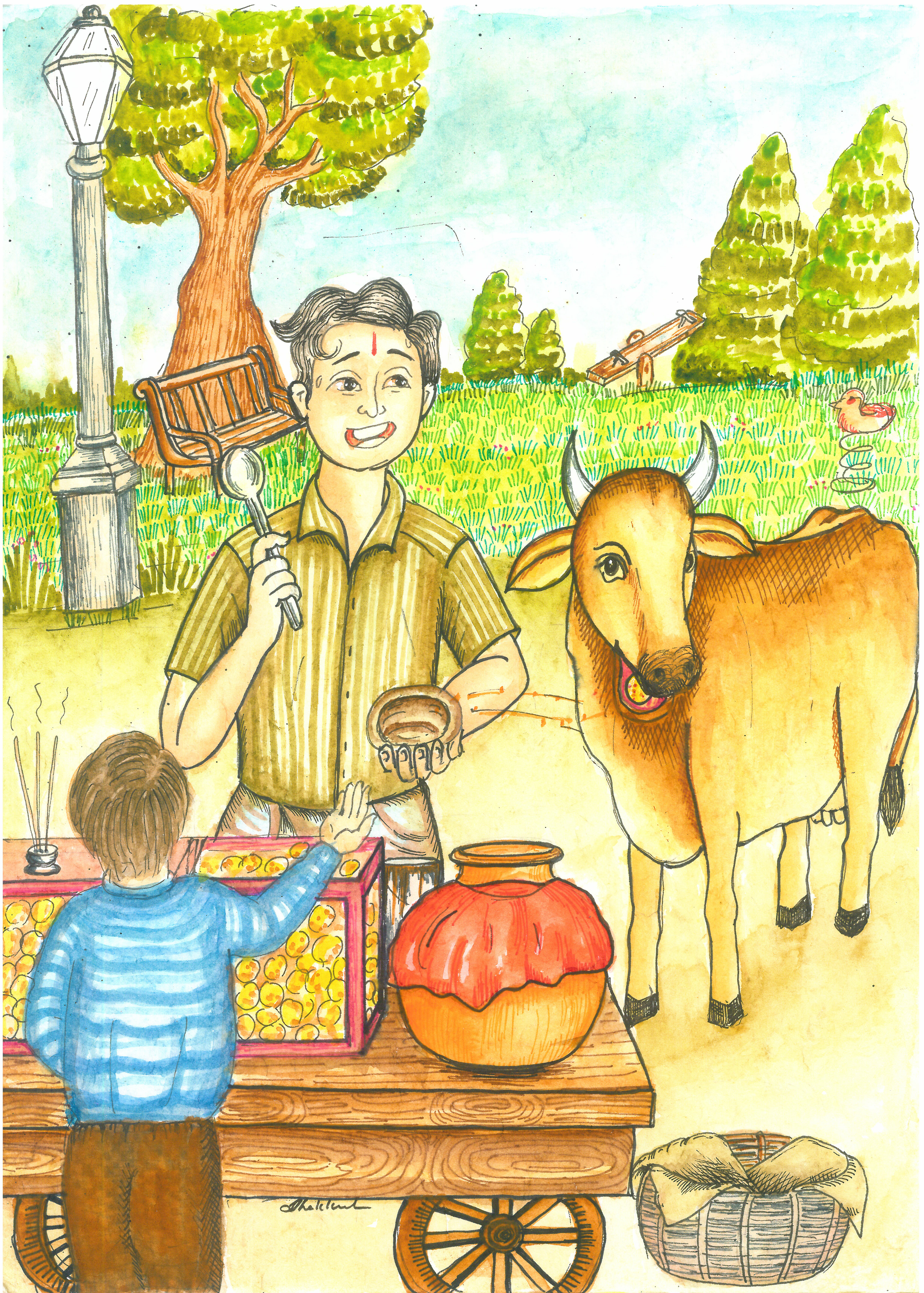
Children love Shakkeela Manoj's “Chaaty Cow” stealing pani puri.
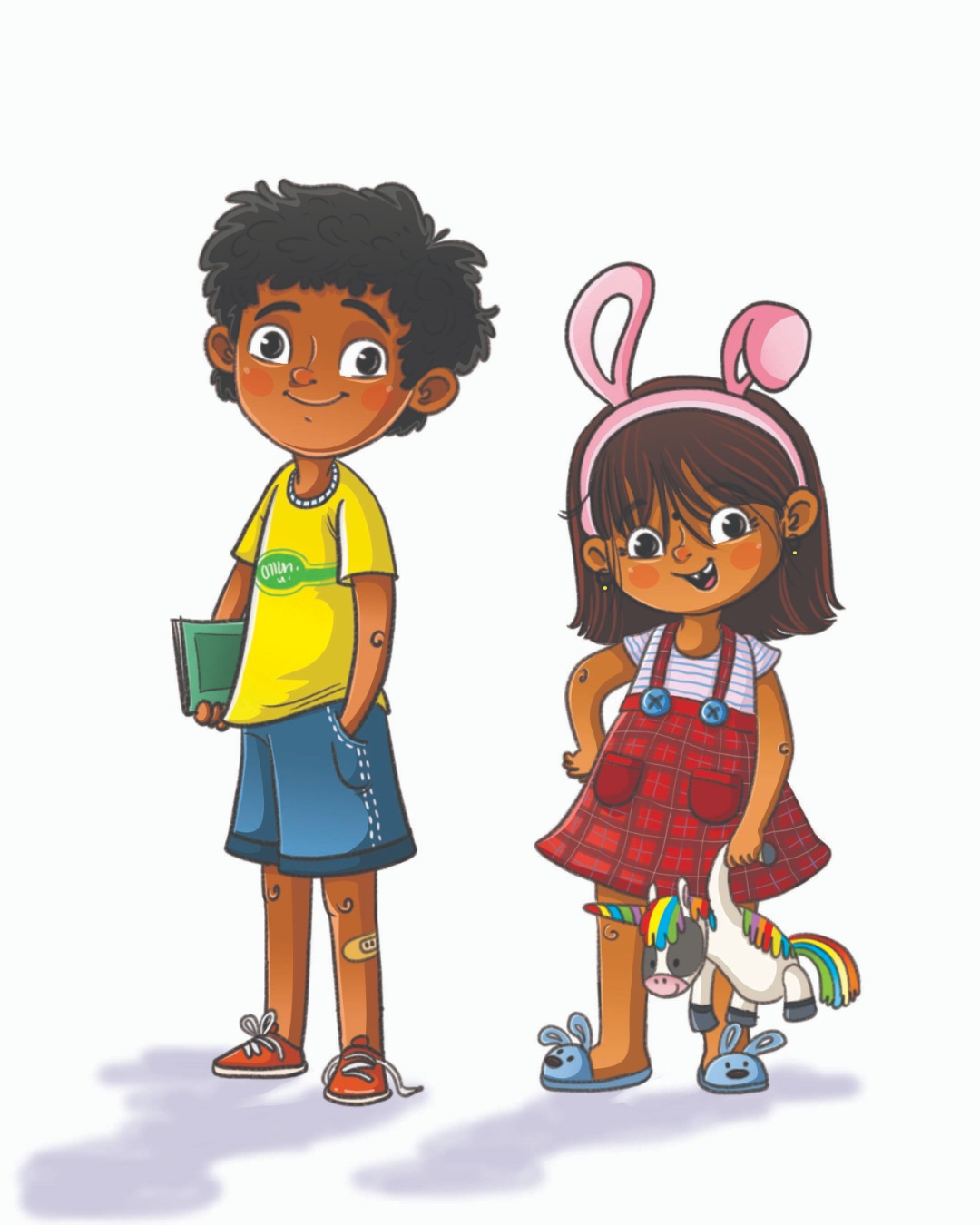
Venkat’s world may not need illustration. But Venkat and Pragya do. Sonal Goyal's fabulous attention to detail tells us in just one glance what kind of characters Venkat and Pragya are. On the flip side, a high-quality, colour illustration of a kitten in an apartment building does little to enhance the experience of a story.
The economics of illustration have shifted since I started writing. But in the age of easy AI art, it becomes even more important to provide space for a child’s imagination to activate.